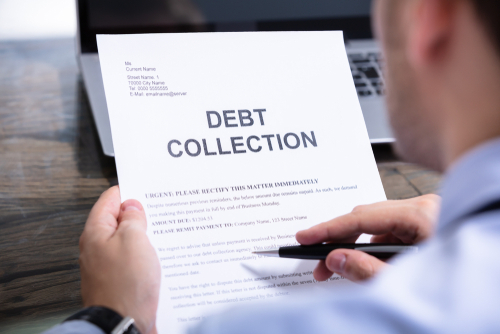
Debt collectors are allowed to contact you about money you owe, but they aren’t allowed to harass, threaten, or deceive you. Federal law, including the Fair Debt Collection Practices Act (FDCPA) and the Consumer Financial Protection Bureau’s Regulation F, sets clear limits on how, when, and how often collectors can reach out. When collectors cross those lines, consumers may be able to stop the harassment and recover compensation.
At DannLaw, our creditor harassment attorneys have been holding banks, debt buyers, and debt collectors accountable since 2008. We help consumers understand their rights, document abusive conduct, and pursue claims against collectors who break the law. Contact DannLaw at 216-373-0539 for a free consultation.
What Is Considered Debt Collection Harassment?
Debt collection harassment includes conduct that harasses, oppresses, or abuses someone in connection with collecting a debt. It can happen through phone calls, letters, emails, text messages, social media messages, or in-person contact. Harassment isn’t limited to the person who owes the debt. Collectors may also violate the law by contacting family members, neighbors, or employers in improper ways.
Not every unwanted call is illegal. A collector can generally contact you to try to collect a valid debt. The question is whether the way they’re doing it crosses the line into conduct the law prohibits.
Common Examples of Illegal Debt Collection Practices
Under the FDCPA and Regulation F, common examples of illegal collection practices include:
- Excessive calls: Calling repeatedly or continuously to annoy or harass you. Subject to certain exceptions, a collector is presumed to violate the call frequency rule if it calls you about a particular debt more than seven times within seven consecutive days or calls again during the seven day period following a telephone conversation about that debt. Fewer calls may still be unlawful depending on their pattern and the circumstances.
- Calls at inconvenient times: Contacting you generally before 8 a.m. or after 9 p.m. at your location, or at another time the collector knows or should know is inconvenient, unless an applicable exception permits the contact.
- Contacting you at work: Contacting you at work when the collector knows or has reason to know your employer prohibits those communications.
- Threats and abusive language: Threatening violence, using obscene or abusive language, or threatening arrest, garnishment, or other action the collector cannot legally take or does not intend to take.
- False or misleading statements: Misrepresenting the amount owed, pretending to be an attorney or government official, or falsely claiming you committed a crime.
- Contacting third parties: Discussing your debt with your employer, family, or friends, except in limited circumstances allowed by law.
- Ignoring cease-contact requests: Continuing to contact you after you’ve told the collector in writing to stop, except for limited purposes allowed by law.
- Unfair practices: Collecting fees or interest not authorized by your agreement or by law, or threatening to take property without the legal right to do so.
Consumer Protection Debt Collector Harassment Laws
Several laws can protect consumers from abusive collection practices. The FDCPA is the primary federal law governing third-party debt collectors, and Regulation F adds detailed rules on communications, including call frequency, electronic messages, and required disclosures.
The Telephone Consumer Protection Act (TCPA) may apply to collection calls made to cell phones using equipment that meets the law’s definition of an autodialer or an artificial or prerecorded voice without the required prior express consent.
The Fair Credit Reporting Act (FCRA) may provide protections when a collector reports inaccurate debt information or fails to meet its obligations when that information is disputed.
Understanding Your Rights Under Federal Debt Collection Laws
Federal law gives you specific rights when a debt collector contacts you. You have the right to receive information about the debt, to dispute it, to limit how and when collectors contact you, and to be treated without harassment or deception.
The Fair Debt Collection Practices Act (FDCPA)
The FDCPA generally applies to collection agencies, many debt buyers, and other businesses that qualify as debt collectors under the law. It covers debts incurred primarily for personal, family, or household purposes. Collectors generally must provide validation information in the initial communication or send it within five days afterward. This information includes the amount owed, the creditor’s name, and instructions for disputing the debt. You generally have 30 days after receiving the validation notice to dispute the debt in writing and require the collector to pause collection of the disputed amount until it sends verification.
You can also send a written request telling the collector to stop contacting you, after which it can generally only contact you to confirm it’s stopping or to notify you of a specific action, such as a lawsuit.
Can Creditors and Debt Collectors Be Held Accountable for Harassment?
Yes, although the rules differ. Third-party collectors and debt buyers can be held accountable under the FDCPA. Original creditors, such as the bank or company you originally borrowed from, are generally not covered by the FDCPA when collecting their own debts. However, they may still be liable under other laws, such as the TCPA for unlawful robocalls, the FCRA for inaccurate credit reporting, or state consumer protection laws. An attorney can review who contacted you and which laws apply.
What to Do If You’re Being Harassed by Debt Collectors
If a debt collector is harassing you, these steps can help protect your rights:
- Keep a record: Write down the date, time, caller’s name, company, and what was said during each contact.
- Save everything: Keep letters, voicemails, text messages, emails, and screenshots of social media messages.
- Request validation: Ask the collector for written validation of the debt, especially if you don’t recognize it.
- Dispute in writing: If you believe the debt is wrong, send a written dispute within the validation period.
- Tell the collector to stop: Send a written request asking the collector to stop contacting you or to limit how they contact you.
- Don’t admit to the debt or make promises: Avoid agreeing to payments or confirming details before you understand your rights.
- File complaints if appropriate: You can submit a complaint to the Consumer Financial Protection Bureau or your state attorney general.
- Contact DannLaw: Call 216-373-0539 to have an attorney review your situation and explain your options.
Can You Sue a Debt Collector for Harassment?
Yes. The FDCPA allows consumers to sue debt collectors who violate the law, in either federal or state court. You don’t need to show that you don’t owe the debt. Even if the debt is valid, a collector that uses illegal tactics to collect it can be held responsible. Your attorney may also bring claims under other federal or state laws, depending on the facts.
Debt Collection Harassment Lawsuit Requirements
To bring an FDCPA claim, you generally need to show that the debt was a consumer debt, the company contacting you was a debt collector covered by the law, and the collector’s conduct violated a specific provision of the FDCPA or Regulation F.
Timing is critical, because an FDCPA lawsuit generally must be filed within one year of the violation. Courts may also look at whether the violation caused you harm, especially in federal court. Because these requirements are technical, documentation and early legal review are important.
Is It Worth Getting an Attorney for Debt Collection Harassment?
For many consumers, yes. In a successful FDCPA action, the collector can be required to pay reasonable attorney fees and court costs. DannLaw can explain the fee arrangement and any potential costs before you decide whether to proceed.
If your debts are overwhelming, an attorney can also explain whether options like bankruptcy, which generally stops most collection activity, may help.
Debt Collector Harassment Damages You Could Be Entitled To
Depending on the facts, consumers who prove an FDCPA violation may recover:
- Statutory damages: Up to $1,000 per lawsuit for an individual consumer, even without proof of financial loss.
- Actual damages: Compensation for real harm caused by the violation, such as lost wages, medical expenses, and emotional distress.
- Attorney fees and costs: Reasonable attorney fees and court costs paid by the collector if you win.
- Class action damages: Under the FDCPA, additional statutory damages for class members other than the named plaintiffs are capped at the lesser of $500,000 or 1% of the collector’s net worth. Actual damages and named plaintiffs’ statutory damages are addressed separately.
Claims under other laws, such as the TCPA, the FCRA, or state consumer protection laws, may provide additional damages. The amount you may recover depends on the specific violations and evidence.
Why Choose DannLaw As Your Creditor Harassment Attorneys?
DannLaw represents consumers in individual cases and class actions, with a focus on holding powerful financial institutions accountable.
When you work with DannLaw, we start by listening and reviewing every call log, letter, and message to understand what happened. We identify each potential violation, develop a strategy tailored to your goals, and take action, whether that means sending a cease and desist demand, negotiating with the collector, or filing a lawsuit. Our goal is to stop the harassment and help you regain stability and peace of mind.
You don’t have to face abusive collectors alone. Contact DannLaw at 216-373-0539 for a free consultation.